Physical Address
304 North Cardinal St.
Dorchester Center, MA 02124
Physical Address
304 North Cardinal St.
Dorchester Center, MA 02124

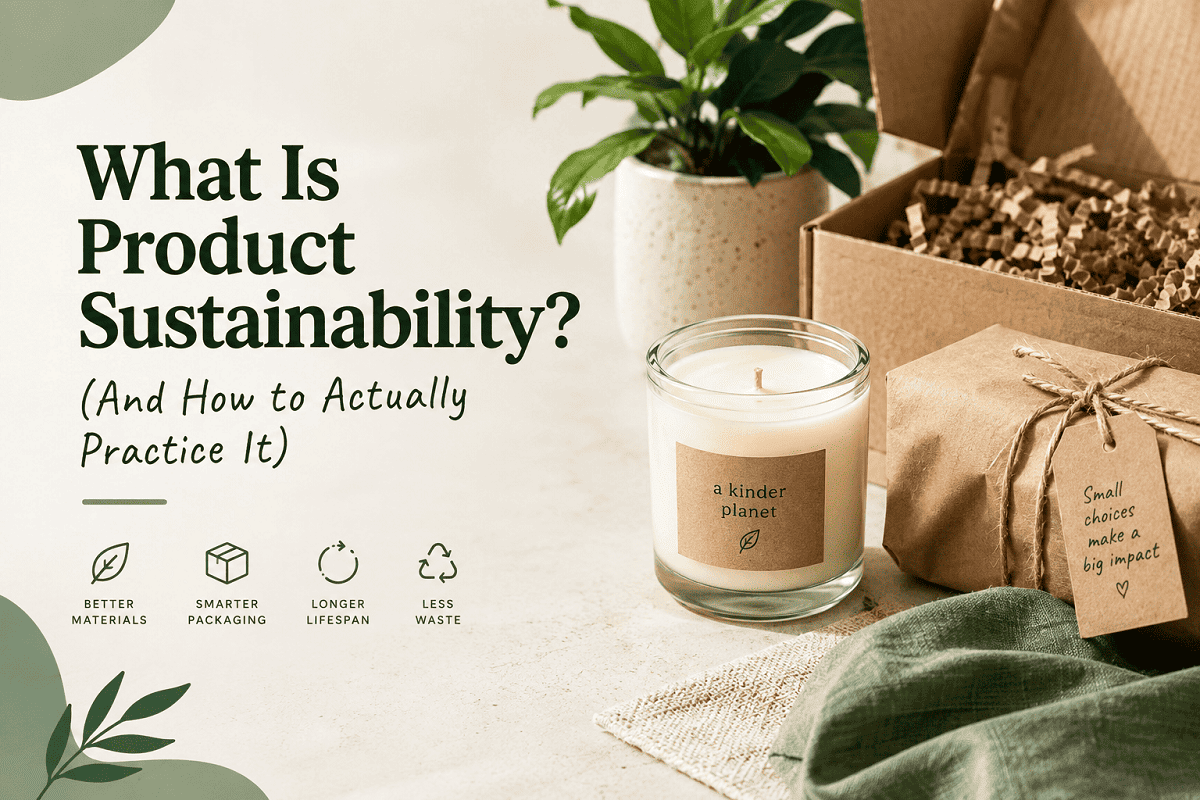
My first product was a line of hand-poured soy candles, shipped in bubble wrap, a plastic mailer, and a box stuffed with more plastic, because apparently candles are one modest jostle from total structural collapse. Then a customer commented, “cute candle, sad amount of plastic,” and I realized I’d solved a shipping problem I didn’t have while quietly creating an environmental one I did.
That’s usually how people discover product sustainability: not in a textbook, but in one uncomfortable comment. Here’s what the term actually means, and what you can do about it without a Fortune 500 budget.
Quick answer: Product sustainability is the practice of designing, making, and selling a product in a way that reduces its environmental impact – from the raw materials it starts as, to what happens to it after someone throws it away. It touches everything: what it’s made of, how it’s produced, how it’s packaged, how long it lasts, and whether it can be reused, recycled, or composted at the end of its life.
Strip away the marketing language, and product sustainability comes down to one question: does this thing do less damage than the alternative?
That “damage” gets measured across what’s sometimes called a product’s life cycle. A genuinely sustainable product tries to minimize harm at every stage of that journey, not just the parts a customer can see.
This is different from a product simply looking eco-friendly. A brand can slap a green leaf on its label and call it a day; that’s greenwashing [marketing that makes a product sound environmentally responsible without meaningfully changing how it’s made]. Actual product sustainability is quieter and less photogenic. It’s decisions about materials, suppliers, and packaging that a customer will never see unless you tell them.
Not quite, and this mix-up trips people up constantly when they’re researching the topic. Business sustainability [running a company in a way that holds up long-term, covering finances, employee treatment, and environmental impact together] is the umbrella term. Product sustainability is one piece of that umbrella — specifically, whether the thing you’re actually selling does less environmental harm than the alternative.
A large company can have strong product sustainability (recycled materials, compostable packaging) while still struggling with the bigger “business sustainability” picture in other areas, like labor practices or financial stability. For a solo seller or small teen-run shop, though, the two tend to collapse into basically the same question, since your product usually is your business.
There’s no single sustainability checkbox. It’s a combination of factors, and most real products land somewhere on a spectrum rather than at a perfect score. Here’s what actually gets weighed:
You are not going to commission a full life cycle assessment for your scrunchie business, and that’s fine. Here’s where a solo or small-scale seller can realistically start:
This is where a lot of well-meaning brands, small and huge, trip up. Words like “natural,” “eco-friendly,” and “green” aren’t regulated the way “organic” is — nobody’s checking your homework before you print them on a label. That’s exactly why the U.S. Federal Trade Commission publishes what’s known as the Green Guides, a set of recommendations for what businesses can and can’t claim about a product’s environmental benefits without misleading customers.
You don’t need to memorize federal guidelines to avoid this trap. Just apply one test before you make any environmental claim: could you explain, specifically, why it’s true? “Eco-friendly” isn’t specific. “Packaged in 100% recycled cardboard” is. The more specific your claim, the more it holds up — and the more it actually means something to the customer reading it.
Not right away, but it’s worth knowing the names you’ll bump into as you grow, because customers and suppliers will mention them:
These take time and money most small or teen-run businesses don’t have in year one, and that’s completely normal. What actually matters at your stage is being specific and honest about what you’re doing right now (see the test above), and revisiting certification later once it makes sense for your size and budget.
Before you touch your production process or switch packaging suppliers, run your product through this quick check:
Answer all five honestly, and you’re already ahead of plenty of brands twice your size.
Is “eco-friendly” the same thing as “sustainable”? Not exactly. “Eco-friendly” is a broad, informal term that usually just means a product is less harmful than typical alternatives. “Sustainable” is a more specific claim about a product’s full life cycle — materials, production, and end-of-life and ideally should be backed by something more concrete than a label.
What’s the difference between “recyclable” and “biodegradable”? Recyclable means a material can be processed and turned into something new, but only if your local facility actually accepts it. Biodegradable means it breaks down naturally over time, though the speed and conditions vary a lot depending on the material. Neither term is automatically better than the other — it depends on what happens to the product in your customers’ actual towns.
What’s the single easiest place to start? Packaging. It’s visible, it’s usually the cheapest fix, and switching to recycled or biodegradable materials rarely requires changing your actual product at all.
Somewhere between that plastic-wrapped candle and this article, I learned that sustainability isn’t a finish line you cross once and get to stop thinking about — it’s a running list of slightly-better decisions. You don’t need to solve your entire supply chain in a weekend. You need to fix the packaging, tell the truth about what you’re actually doing, and keep improving from there. That’s a business practice. The green leaf on the label is optional.
Related reading: