Physical Address
304 North Cardinal St.
Dorchester Center, MA 02124
Physical Address
304 North Cardinal St.
Dorchester Center, MA 02124

I once spent an entire study hall scrolling trucking job boards instead of finishing my homework. In my defense, the numbers were wild – some of these listings promised $80,000 or $90,000 a year for drivers barely older than my cousin. Then I hit the fine print on almost every single one: TWIC card required. No explanation. No link. Just three letters standing between me and what looked like a genuinely great career.
So, naturally, I did what anyone would do: I typed “what is a TWIC card” into Google at 11 p.m., looking for the meaning behind those four letters, and fell down a rabbit hole of government forms, fingerprint scanners, and something called a “security threat assessment.” Turns out it’s not nearly as mysterious – or as far off – as it first seemed. Here’s everything I wish that search had told me right away.
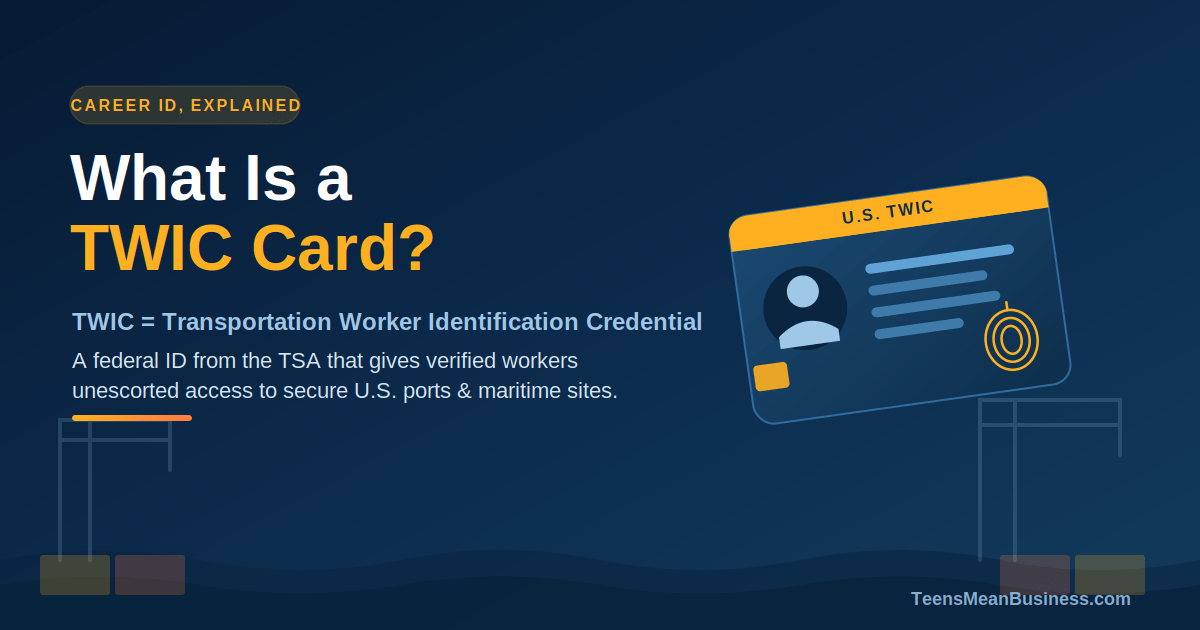
TWIC stands for Transportation Worker Identification Credential, and it’s a federal ID card issued by the Transportation Security Administration (TSA). It exists because of a law called the Maritime Transportation Security Act, which was passed to control who can walk into the secure parts of America’s ports, ships, and marine terminals without a chaperone.
Picture it like a backstage pass, except instead of getting you past a bouncer at a concert, it gets you past port security so you can pick up or drop off cargo without someone babysitting you the whole time. The card itself is genuinely high-tech: it’s tamper-resistant, holds a copy of your fingerprint data, and has a chip built in so facilities can verify it’s really you holding it.
You don’t need a TWIC card to work just any job — but a surprising number of well-paying ones require it:
If a job description mentions ports, terminals, drayage, or maritime facilities, there’s a good chance TWIC shows up somewhere in the requirements.
A TWIC card isn’t just a box to check for a job application, it actually comes with some real perks attached:
You have to be at least 18 years old to apply for a TWIC card. The TSA also requires that you’re a U.S. citizen, U.S. national, or fall into a specific list of lawful immigration categories, like a lawful permanent resident or asylee.
So no, you can’t walk into an enrollment center at 16 and walk out with one, but it’s worth knowing the requirement exists well before it applies to you.
This is where it stops being abstract and starts being a real budget line. As of now:
Once approved, the card is good for five years, so that fee is really an investment spread across half a decade, not an annual cost.
The application itself isn’t complicated, but it does take patience:
Realistically, budget 30 to 45 days from application to card in hand, though the TSA itself recommends applying 60 to 90 days before you actually need it, since processing can back up.
Yes: and it’s worth knowing why, especially if this is a career you’re planning years in advance. The TSA can deny a TWIC card if you can’t prove your identity or citizenship, fail the background check, or have certain disqualifying criminal convictions on your record. There’s an appeals and waiver process if you believe a denial was wrong, but it can take a while, so most guides suggest only applying once you’re fairly confident you’ll qualify, that non-refundable fee stings if it doesn’t work out.
If you’re eyeing a career anywhere near ports, maritime shipping, or long-haul trucking that touches intermodal terminals, the honest answer is: almost certainly, yes. It’s a one-time hassle and a modest fee for five years of access to jobs that plenty of other applicants simply can’t take. You won’t be filling out that application anytime soon – but now, at least, you won’t be the one squinting at a job listing at 11 p.m., wondering what those four letters even mean.